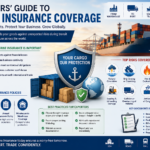
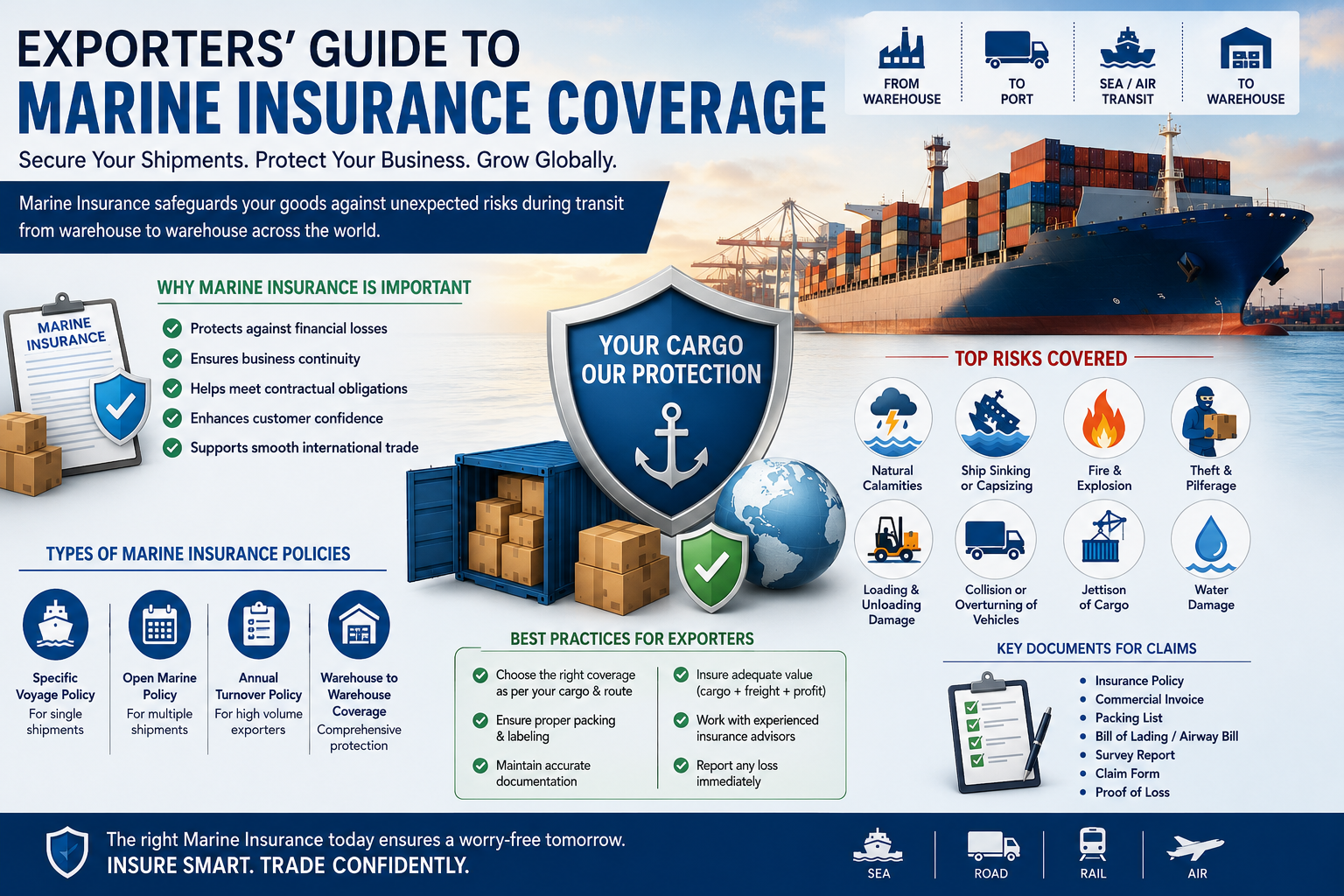
In today’s global marketplace, exporting goods across international borders presents tremendous business opportunities. However, international trade also involves various risks such as cargo damage, theft, natural disasters, accidents, and shipping delays. Marine insurance serves as a crucial financial safety net for exporters by protecting goods during transit and minimizing potential losses.
This guide explains the importance of marine insurance for exporters, the types of coverage available, and how exporters can choose the right policy for their business needs.
What Is Marine Insurance?
Marine insurance is a specialized insurance policy designed to protect goods, cargo, vessels, and related interests against loss or damage during transportation by sea, air, rail, or road.
For exporters, marine insurance provides financial compensation if goods are damaged, lost, or stolen while being transported from the seller’s warehouse to the buyer’s destination.
Why Marine Insurance Is Important for Exporters
International shipments pass through multiple stages, including:
- Inland transportation
- Warehousing
- Port handling
- Ocean or air freight
- Customs clearance
- Final delivery
At every stage, cargo may be exposed to various risks. Marine insurance helps exporters:
- Protect their financial investment
- Ensure business continuity
- Meet contractual obligations
- Improve customer confidence
- Reduce losses from unexpected events
Without adequate insurance coverage, a single shipment loss can significantly impact profitability.
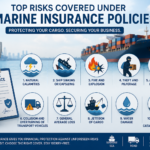
Risks Faced by Exporters During Transit
Exported goods may encounter numerous risks, including:
Natural Disasters
- Cyclones
- Storms
- Floods
- Tsunamis
- Earthquakes
Transportation Accidents
- Ship collisions
- Vessel sinking
- Grounding
- Truck accidents
- Aircraft incidents
Cargo Damage
- Improper handling
- Water damage
- Fire
- Explosion
- Container collapse
Theft and Pilferage
- Cargo theft
- Burglary
- Missing shipments
- Unauthorized delivery
Political and External Risks
- Strikes
- Riots
- Civil disturbances
- War-related risks (subject to specific coverage)
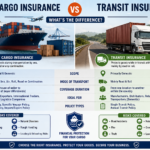
Types of Marine Insurance Policies for Exporters
1. Specific Voyage Policy
This policy covers a single shipment from the point of origin to the destination.
It is suitable for exporters who ship goods occasionally.
2. Open Marine Policy
An open policy covers multiple shipments during a specified period, usually one year.
It is ideal for exporters with regular shipments and eliminates the need to insure every consignment separately.
3. Annual Turnover Policy
This policy provides comprehensive coverage for all shipments based on the exporter’s annual turnover.
Large exporters often prefer this option due to its convenience and cost-effectiveness.
4. Inland Transit Insurance
Protects goods while they are transported within the country before reaching the port or airport.
5. Warehouse-to-Warehouse Coverage
This comprehensive coverage protects goods from the exporter’s warehouse until delivery at the buyer’s warehouse.
It is among the most preferred forms of marine insurance for exporters.
Common Coverage Provided Under Marine Insurance
A marine insurance policy may cover:
Cargo Damage
Compensation for physical damage to goods during transit.
Fire and Explosion
Losses arising from fire, explosions, or combustion incidents.
Vessel Accidents
Damage resulting from sinking, grounding, capsizing, or collision.
Theft and Pilferage
Protection against theft, burglary, and non-delivery.
General Average Contributions
Coverage for expenses shared among cargo owners when extraordinary sacrifices are made to save a vessel during an emergency.
Loading and Unloading Damage
Protection against accidental damage while handling cargo at ports, warehouses, and terminals.
Water Damage
Coverage for losses caused by seawater, rainwater, leakage, or moisture exposure.
Understanding Institute Cargo Clauses (ICC)
Marine cargo insurance is often issued under Institute Cargo Clauses.
ICC (A) – All Risks Coverage
Provides the widest coverage and protects against most accidental losses and damages unless specifically excluded.
ICC (B)
Offers intermediate coverage with protection against specific listed risks.
ICC (C)
Provides basic coverage against major transit risks and is generally the most economical option.
Exporters should carefully review the clause applicable to their policy before purchasing coverage.
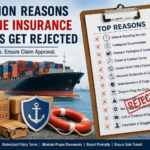
Important Exclusions in Marine Insurance
Marine insurance policies generally do not cover:
- Ordinary wear and tear
- Inherent defects in goods
- Improper packing
- Delay in transit
- Loss of market value
- Willful misconduct
- Nuclear risks
- Certain war-related losses unless specifically insured
Understanding policy exclusions is critical to avoiding claim disputes.
Documents Required for Marine Insurance Claims
If a loss occurs, exporters may need:
- Insurance policy document
- Commercial invoice
- Packing list
- Bill of lading or airway bill
- Survey report
- Claim form
- Proof of loss or damage
- Photographs and supporting evidence
Maintaining accurate records can significantly improve claim settlement efficiency.
Tips for Exporters When Purchasing Marine Insurance
Assess Cargo Value Carefully
Ensure the sum insured reflects the actual value of goods plus freight and expected profit where applicable.
Choose Appropriate Coverage
Select ICC (A), ICC (B), or ICC (C) coverage based on the nature of cargo and risk exposure.
Verify Policy Exclusions
Understand what is not covered before finalizing the policy.
Maintain Proper Packaging
Many claims are rejected due to inadequate packaging.
Keep Detailed Documentation
Accurate documentation is essential for successful claim settlement.
Work with Experienced Insurance Advisors
Professional guidance can help exporters choose suitable coverage and avoid costly mistakes.
How Marine Insurance Supports International Trade
Marine insurance plays a crucial role in facilitating global commerce by:
- Reducing financial uncertainty
- Enhancing supply chain resilience
- Protecting exporters’ cash flow
- Encouraging cross-border trade
- Supporting contractual compliance
Many international buyers also prefer dealing with exporters who have adequate cargo insurance coverage.
Conclusion
Marine insurance is an indispensable risk management tool for exporters. Whether shipping goods occasionally or managing large-scale international trade operations, having the right marine insurance coverage can protect against significant financial losses arising from cargo damage, theft, accidents, and natural disasters.
Before selecting a policy, exporters should carefully assess their shipment patterns, cargo value, transit routes, and risk exposure to ensure comprehensive protection throughout the export journey.